
African Economy Inc.
  • Home
  • Economy
  • Business
  • Markets
  • Finance
  • Credit Ratings
  • Policy
  • Tech
African Economy Inc.
  • Home
  • Economy
  • Business
  • Markets
  • Finance
  • Credit Ratings
  • Policy
  • Tech
Top News
WIOCC Group has secured a $300 million investment from AFC and Vision Invest
IMF, Senegal Reach $2.2 Billion Three-Year Loan Agreement as Debt Restructuring Begins
Ghana’s COCOBOD Pays $204 Million in Bond Obligations as Debt Restructuring Continues
Senegal Bonds Fall to Record Lows Ahead of Expected IMF Statement on Debt Restructuring
Epiroc Wins Large Equipment Order for Khoemacau Copper Mine Expansion in Botswana
Mauritius Sets AI Agenda to Transform Economy, Public Services and Workforce
South Africa Manufacturing PMI Falls to 45.8 in August on Weak Domestic Demand
India Resumes Talks With Zambia on Copper and Critical Minerals Investment
Paystack Acquired Allawee as Card Fintech Prepares to Shut Down Accounts
Spiro Appoints Automotive Veteran, Choudhuri to Lead West and Central African Operations
South African VC Mamor Capital Raises $18.8 Million First Fund
Nigeria’s Power Sector Decreases 10.63% as Contraction Continues
Apple Applies Morocco’s 20% VAT to App Store Proceeds and Prices
Mozambique’s President Appoints Waldemar de Sousa as New Central Bank Governor
Kenya Aviation Workers End Strike After Flight Disruptions
SUBSCRIBE
African Economy Inc.
Subscribe
African Economy Inc.
  • Home
  • Economy
  • Business
  • Markets
  • Finance
  • Credit Ratings
  • Policy
  • Tech
Copyright 2026 - All Right Reserved
Home » South African Miners Fastens Shift to Renewable Power to Cut Eskom Reliance
Energy

South African Miners Fastens Shift to Renewable Power to Cut Eskom Reliance

by Oluebube Elechi August 26, 2026
written by Oluebube Elechi August 26, 2026
FacebookTwitterLinkedinEmail
17

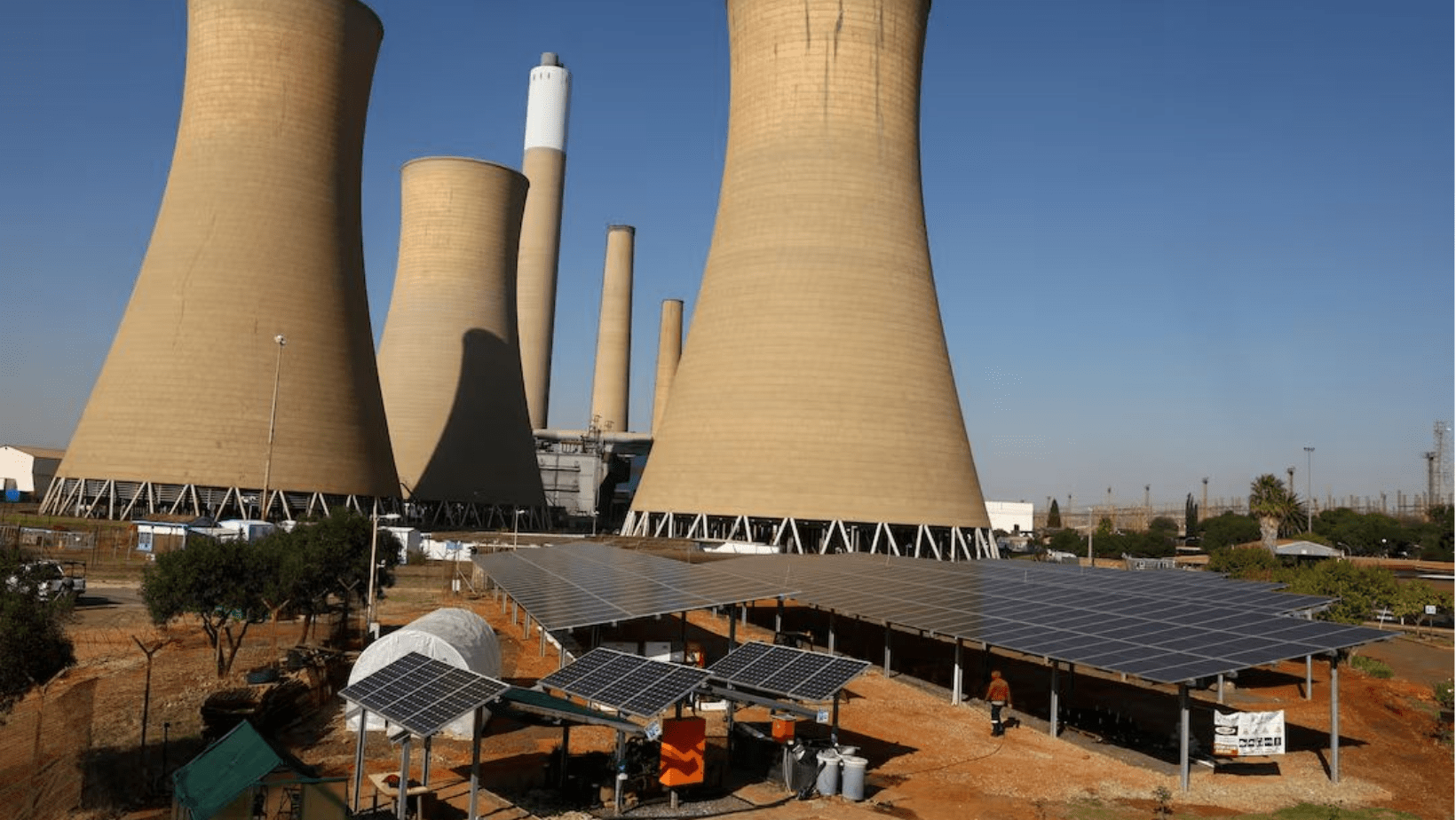
JOHANNESBURG, Aug 26 – South African miners are accelerating their shift to renewable power as they look to reduce costs, diversify their energy sources and meet decarbonisation targets, gradually reducing their long-standing dependence on state utility Eskom.

Mining companies including Anglo American and Sibanye Stillwater are investing in renewable energy as Eskom’s ageing coal-fired power plants continue to dominate South Africa’s electricity system. Executives, however, say Eskom will remain an important source of baseload power for years because renewable energy is intermittent and battery storage is still developing.

South Africa currently generates more than 80% of its electricity from coal, while renewables account for about 10%.

Anglo American has partnered with independent power producers through Envusa Energy, a 50-50 joint venture it established with EDF power solutions in 2022. The venture supplies renewable energy to Anglo’s Kumba Iron Ore, De Beers and former subsidiary Valterra Platinum.

You Might Be Interested In
  • IEA, IMF, World Bank Warn Middle East War Triggering Global Energy Shock

Envusa currently produces 520 megawatts, made up of 280 MW of wind and 240 MW of solar, covering about 30% of Anglo’s mining energy consumption. Its project pipeline stands at 1,500 MW, with plans to reach 3,000 MW by 2030 for Anglo’s operations and other industrial users.

Envusa CEO Nicole Mason said renewable power from wind and solar could be 20% to 30% cheaper than Eskom electricity.

Sibanye, which relied on Eskom for about 99% of its platinum group metals energy needs and 88% of its gold electricity demand last year, has chosen to buy renewable power through supply agreements instead of owning generation assets. It has contracted 835 MW of renewable capacity, with 164 MW already operational.

By the end of 2028, renewables are expected to supply about 64% of energy demand at Sibanye’s South African operations, CEO Richard Stewart said. He expects renewable power to cost 20% to 30% less than forecast Eskom tariffs.

Coal producer Exxaro Resources is also expanding renewable energy through its subsidiary Cennergi, which operates 297 MW and has a 593 MW pipeline. Exxaro is targeting 1,600 MW by 2030.

Its 68 MW solar plant has already cut Grootegeluk coal mine’s reliance on the national grid by 30%, saving about 100 million rand ($6.25 million) annually and reducing scope 2 emissions by 22%.

Meanwhile, Thungela Resources is developing a coal-bed methane project at Lephalale to diversify its energy business. The company has drilled about 19 wells and begun extracting gas to power a generator at one of its sites, potentially saving 30 million to 40 million rand a year in Eskom costs.

Read Next

  • Kenya Inflation Rises to 6.6% in August as Higher Fuel Costs Push Prices Higher

    August 31, 2026
  • South Africa’s Eskom Secures LNG Supply Deal to Support Planned 3,000MW Gas Power Project

    June 5, 2026
  • Ghana Pays Down $1.47 Billion Energy Arrears to Stabilize Power Sector

    January 13, 2026
  • Nigeria’s Central Bank to Auction $480 Million Treasury Bills in May 2026 Issuance

    May 19, 2026
  • US Moves to Lift Eritrea Sanctions Amid Red Sea Stakes Reshape Alliances

    May 5, 2026

Newsletter

Subscribe to our newsletter for trusted insights on Africa’s economies, markets, and business.

African Economy Inc. Logo

About Us

We are a business and economic intelligence platform delivering in-depth reporting, analysis, and insights on markets, companies and economic developments across Africa.

Our Company

  • AEI Intelligence
  • About
  • Editorial Standard
  • Partnerships
  • Advertise With Us
  • Careers
  • Ownership

News

  • Economy
  • Business
  • Markets
  • Finance
  • Credit Ratings
  • Policy
  • Tech

Useful Links

  • Privacy Policy
  • Terms of Use
  • Closed Captioning Policy
  • Accessibility Statement
  • Personal Information
  • Data Tracking
  • Register New Account

Subscribe Newsletter

Subscribe to our newsletter for trusted insights on Africa’s economies, markets, and business.

©2026 Majons Media Inc. All Rights Reserved.

Facebook Twitter Instagram Linkedin
African Economy Inc.
  • Economy
  • Business
  • Markets
  • Banking & Finance
  • Energy
  • Tech
  • Policy